At 22, Julian Kanter wants many of the same things as other young adults: to spend time with friends, travel independently, pursue his interests and be part of the community around him. Julian, who has a cognitive disability and communicates mostly without spoken words, has spent the past four years in AccessSFUSD The Arc, learning to navigate San Francisco, participate in workplace internships and prepare for adulthood.
But as he graduates and ages out of the public school system, many of the structured opportunities and supports that have helped him build that independence are coming to an end. What comes next is less certain.
For Julian, independence is not an abstract idea; it is riding Muni alone, working a job, managing money, maintaining friendships and being known in his neighborhood. This series follows Julian through his final days of school as he enters adulthood wanting what most 22-year-olds want: the opportunity to build a life of his own.

Julian Kanter, 22, of San Francisco, rides Muni Route 24 to AccessSFUSD The Arc on his second-to-last day of school in San Francisco on Monday, June 1, 2026. Julian, who has a cognitive disability, has spent the past four years in the transition program learning skills intended to prepare him for life after public school, including navigating San Francisco’s public transportation system independently. Transit has become both a practical tool for Julian’s independence and one of his biggest interests; he studies routes, schedules and vehicles and regularly travels across the city on his own. As Julian prepares to graduate and age out of the public school system at 22, the routines, educators and opportunities that have structured his days will change, making skills such as navigating the city increasingly important to what comes next.

Julian Kanter, 22, of San Francisco, organizes a bin of Legos in the library at Dolores Huerta Elementary School during an internship through AccessSFUSD The Arc on Monday, June 1, 2026. Julian, who has a cognitive disability, has spent four years in the transition program preparing for adulthood through community-based experiences that include workplace internships, independent travel and managing everyday responsibilities. His placement at the elementary school gives him experience working alongside others before he graduates and ages out of the public school system at 22. For Julian, the internship is also one of many places where relationships extend beyond his disability and he is known as a coworker, volunteer and member of the community. “He’s always being himself,” said Julian’s longtime friend Drake Lenard, 21, of San Francisco. “People shouldn’t have to worry about that, because that’s a part of them.”
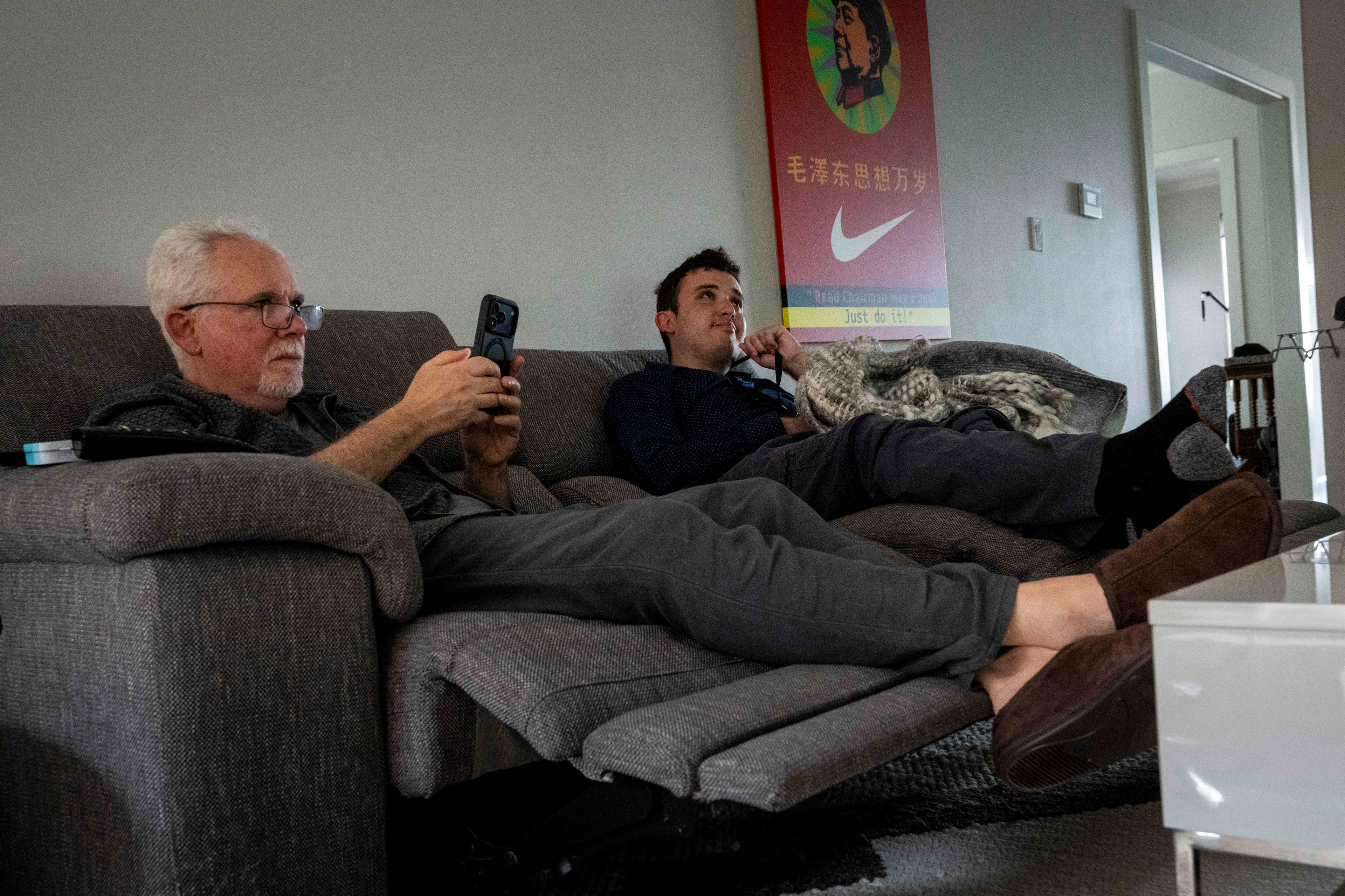
Peter Kanter, left, watches the New York Yankees play the Cleveland Guardians with his son, Julian Kanter, 22, at their San Francisco home on Tuesday, June 2, 2026. The night before Julian’s graduation from AccessSFUSD The Arc, father and son spent the evening watching baseball and talking about the changes ahead. Julian, who has a cognitive disability, has spent the past four years in the transition program learning to navigate the city, work in community-based internships and take on more everyday responsibilities independently. His graduation marks more than the end of school: At 22, Julian is aging out of the public school system and leaving behind much of the structure that has helped prepare him for adulthood. Peter has watched his son become increasingly independent, particularly in his ability to travel throughout San Francisco on his own. “Graduation should be exciting,” Peter told his son. “It’s a time for change.”

Julian Kanter, 22, left, sits with his best friend, Anthony Li, 21, outside A.P. Giannini Middle School in San Francisco on Monday, June 1, 2026. The two have known each other for years, and Julian returns to the campus each Monday to visit a paraprofessional who played an important role during his time in school while Anthony interns there. For Julian, who has a cognitive disability, graduating from AccessSFUSD The Arc and aging out of the public school system at 22 means leaving behind more than classes. Teachers, paraprofessionals, friends and familiar routines have provided a network of relationships and consistency as he has learned to navigate adulthood more independently. Anthony, who will remain part of Julian’s life after graduation, said he is looking forward to seeing where his friend goes next. “I feel excited for him to move on to another journey,” Anthony said.

Julian Kanter, 22, jumps down the stairs after finishing his day at AccessSFUSD The Arc before boarding San Francisco’s J Church Muni line on Monday, June 1, 2026. Public transportation is more than a way for Julian, who has a cognitive disability, to get around the city. He spends hours studying routes, memorizing schedules and tracking vehicles, and his interest in transit has become a source of routine, confidence and connection with the people around him. During four years in the transition program, Julian has also learned to use that interest as a tool for independence, allowing him to travel across San Francisco without relying on someone else to take him. As he prepares to graduate and age out of the public school system at 22, that ability will remain with him even as much of the structure surrounding his daily life changes. “One of the greatest skills he has is his ability to get himself around,” said Julian’s father, Peter Kanter.

From right, Julian Kanter, 22, and his paraprofessional educator, Luis Medina, ride Muni after leaving Julian’s job placement in San Francisco on Monday, June 1, 2026. Medina has worked with Julian through AccessSFUSD The Arc, a transition program where Julian, who has a cognitive disability, has spent four years developing skills for greater independence before aging out of the public school system at 22. Moments before the photograph was made, another passenger became upset after Julian accidentally brushed him with his backpack while taking a seat. When Medina intervened and identified himself as Julian’s teacher, the passenger responded, “You ain’t no f---ing teacher. You’re his f---ing caretaker.” The encounter illustrated one of the challenges Julian can face while doing something he otherwise confidently does on his own: navigating the city’s public transportation system. Medina said confrontations like it are uncommon but remain difficult. “It doesn’t happen too often, but it’s hard,” he said. “It’s hard to hear.”
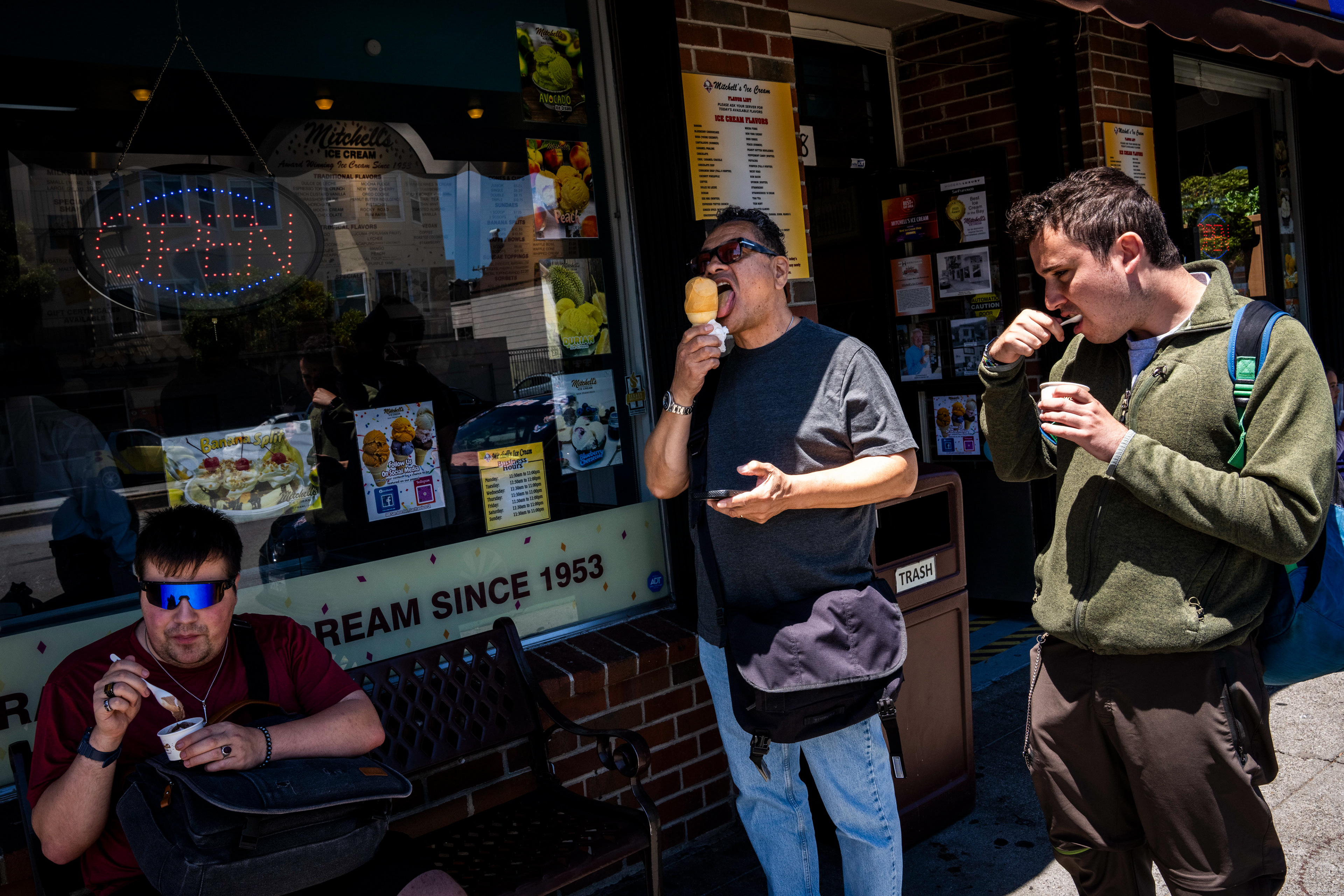
From left, Julian’s longtime friend Drake Lenard, 21, Julian’s paraprofessional educator Luis Medina and Julian Kanter, 22, eat ice cream at Mitchell’s Ice Cream in San Francisco on Monday, June 1, 2026. The three stopped for Julian’s favorite, grasshopper ice cream, after his final day at a community-based job placement through AccessSFUSD The Arc. Julian, who has a cognitive disability, has spent four years in the transition program practicing skills that extend beyond employment, including navigating the city, budgeting, handling money and making purchases independently. Everyday outings with friends and educators give Julian opportunities to practice those responsibilities while also doing what other young adults do: spending time with friends and participating in his community. As he prepares to graduate and age out of the public school system at 22, those decisions will increasingly become part of a life with less of the structure school has provided. “You have to learn how to be responsible with the money that you have,” said Julian’s father, Peter Kanter.

Julian Kanter, 22, waits for a bus in San Francisco’s Noe Valley neighborhood on Monday, June 1, 2026. Julian, who has a cognitive disability, has spent the past four years in AccessSFUSD The Arc learning to navigate the city, gain workplace experience and take on everyday responsibilities as he prepares for adulthood. Now, as he graduates and ages out of the public school system at 22, many of the structured opportunities, educators and routines that have helped him develop that independence are coming to an end. Julian wants many of the same things as other young adults: to travel on his own, spend time with friends, pursue his interests and participate in his community, but he says those goals can be complicated by the assumptions others make about his disability. “I want people to see me for who I am,” Julian said through his mother, Lucia Kanter, who helped communicate his thoughts when he had difficulty finding the words. “I want to go places on my own, be with my friends and be part of my community.”

Julian Kanter, 22, celebrates with classmates after graduating from AccessSFUSD The Arc at the Golden Gate Bandshell in San Francisco on Wednesday, June 3, 2026. Julian, who has a cognitive disability, spent four years in the transition program learning to navigate San Francisco independently, participating in workplace internships, managing everyday responsibilities and preparing for life beyond public school. Graduation marked both an achievement and a significant transition: At 22, Julian is aging out of the public school system, ending a period in which teachers, paraprofessionals, internships and familiar routines provided structure as he developed greater independence. What comes next is less defined as Julian and his family navigate adulthood and the services and opportunities available beyond school. During the ceremony, AccessSFUSD Executive Director Kara Schinella told graduates they had “turned obstacles into opportunities, barriers into bridges and doubt into determination,” and reminded them that accessibility “is not a favor, it’s a right.”

