For decades, Michigan State students have known Michael Venyah by a different name: the Wells Hall Preacher.
From his regular spot behind one of MSU’s busiest classroom buildings, Venyah has built a reputation through confrontational sermons about sin, salvation, sexuality and student life. Once, his appearances on college campuses drew crowds of protesters, debates over free speech and fierce criticism from students who saw his message as hateful. Today, he often preaches to a campus that has learned to walk past him.
On a recent Monday afternoon, as students moved through the courtyard before class, Venyah called out to passersby about video games, masturbation and fornication. Few stopped. Most avoided eye contact, glanced at their phones or kept walking.
It was a quieter scene than the one Venyah once inspired. In the 2000s, his campus preaching could draw crowds of students who shouted back, protested or tried to drown him out. He says he has been banned from campuses, jailed and physically attacked. His critics have called him a nuisance, a bigot and a damaging representative of Christianity. Some Christian students and local faith leaders say his approach makes their work harder.
But Venyah sees his mission differently. To him, the students passing behind Wells are not simply ignoring a preacher. They are being offered a choice.
His story at MSU began before the sermons. Venyah grew up in East Lansing and returned to Michigan State for his final year of college after time at the University of Southern California and a study abroad program in England. Before becoming a preacher, he was a student-journalist, writing for an alternative student newspaper about race, politics and social issues.
At the time, Venyah said he was an atheist. He told The State News he drank, used drugs, studied different religions and felt something missing. During his senior year, a family friend invited him to church. Venyah said the service changed his life.
“That’s it. Michael Venyah is dead,” he remembered saying afterward. “Now Jesus Christ lives in his life.”
Soon after, Venyah left school and entered full-time ministry. By 1996, he was ordained. He later married his wife, Tamika, and the two began traveling the country to preach on college campuses. Their children, who are homeschooled, have often joined them.
Venyah describes campus preaching as urgent spiritual work. In a 2016 interview with the student newspaper at the University of Maryland, he compared it to running into a burning building to warn people of danger. In his view, college campuses are places where students must decide whether to repent or continue toward damnation.
That message has long made him a flashpoint.
Student newspaper archives from campuses across the country show Venyah drawing protests, arguments and backlash for years. Students have shouted him down, mocked him, debated him and staged counterprotests. At MSU, other preachers have also appeared behind Wells Hall, but Venyah became the most recognizable. His sermons turned him into a fixture of the space, part of the memory of students who passed him on the way to lectures, recitations and exams.
His message has also troubled other Christians.
Daniel Foster, a board member at Crossway Multinational Church in East Lansing, said Venyah creates a dilemma for believers who feel he misrepresents their faith.
“There’s someone who says they’re on your team, and they’re acting this way,” Foster said. “So, what does the rest of the team think?”
Foster said he understands why some Christians might want to debate Venyah’s methods, but he doubts those conversations would change much. Other students and writers have reached similar conclusions over the years, arguing that engaging Venyah often gives him exactly what he wants: attention and confrontation.
That may be part of why his role on campus now feels different. Where he once drew crowds, he often meets indifference. Students still know who he is, but many treat him less as a threat than as a familiar campus oddity.
Venyah has noticed the change too. He said he is beginning to wind down his campus preaching to focus more on his South Lansing church and political work.
Still, behind Wells Hall, he continues to preach. On the afternoons he is there, his voice carries across the walkway as students hurry by. Some laugh. Some look away. Some stop for a moment, then move on.
For Venyah, even one brief exchange can matter. When someone approaches, even to challenge him, he becomes more animated. His posture straightens. His focus sharpens. After hours of preaching into open air, a single student’s attention can still bring the sermon back to life.
For many at MSU, the Wells Hall Preacher is background noise. For Venyah, it remains a calling.
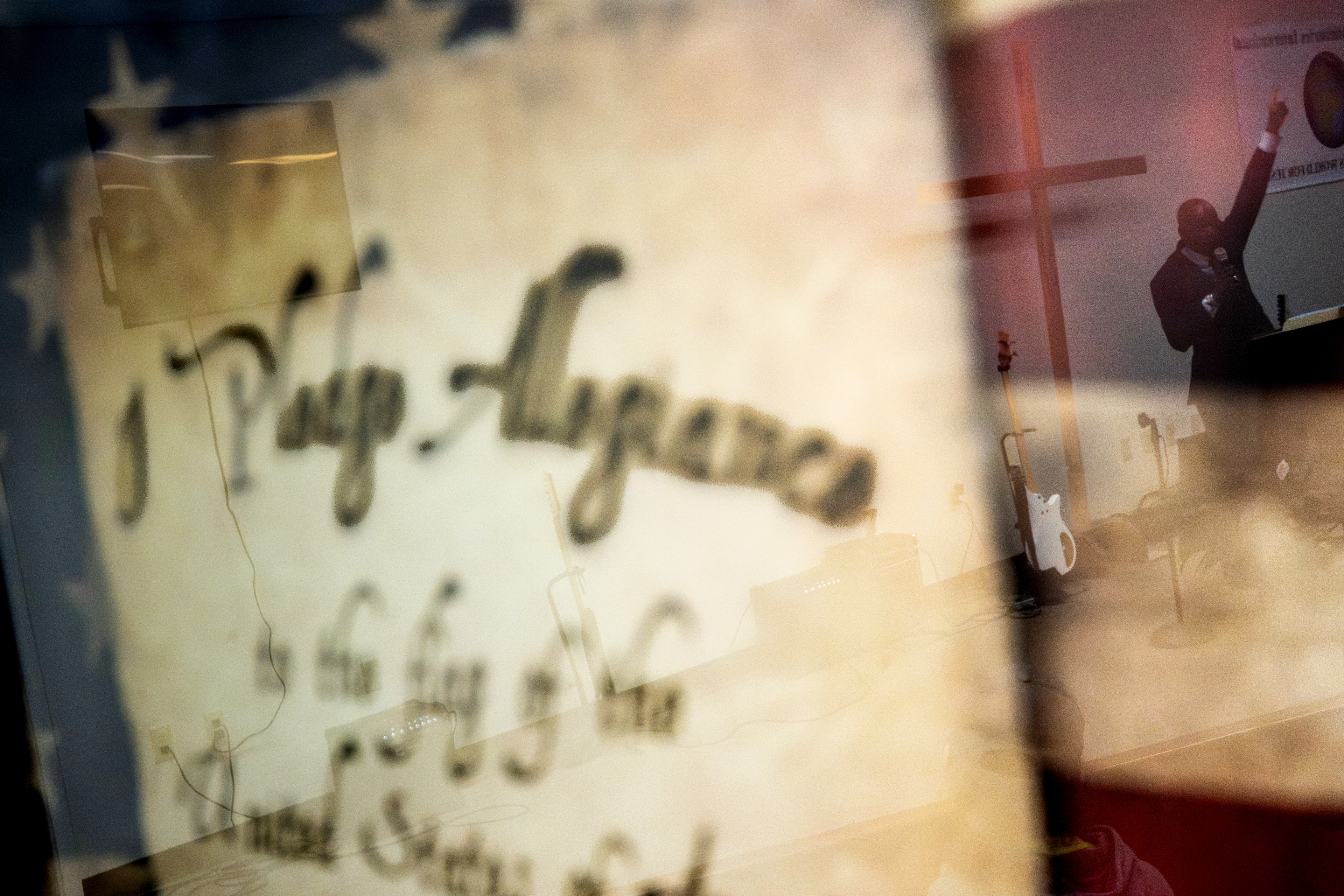
Pastor Michael Venyah raises his hand while preaching during a Sunday worship service at Soulwinners Fellowship Church in Lansing, Mich., on Sunday, April 12, 2026. Away from Wells Hall, Venyah’s sermon moved through a wider range than his campus preaching, shifting between quieter appeals and raised-voice refrains. At one point, he called out, “Can you say Amen!” before grinning and adding, “That’s a good place to clap if you want to!” The service also included references to the current presidential administration, with Venyah’s wife, Tamika, urging congregants to “keep praying for his administration” and “make the USA godly and great again.”
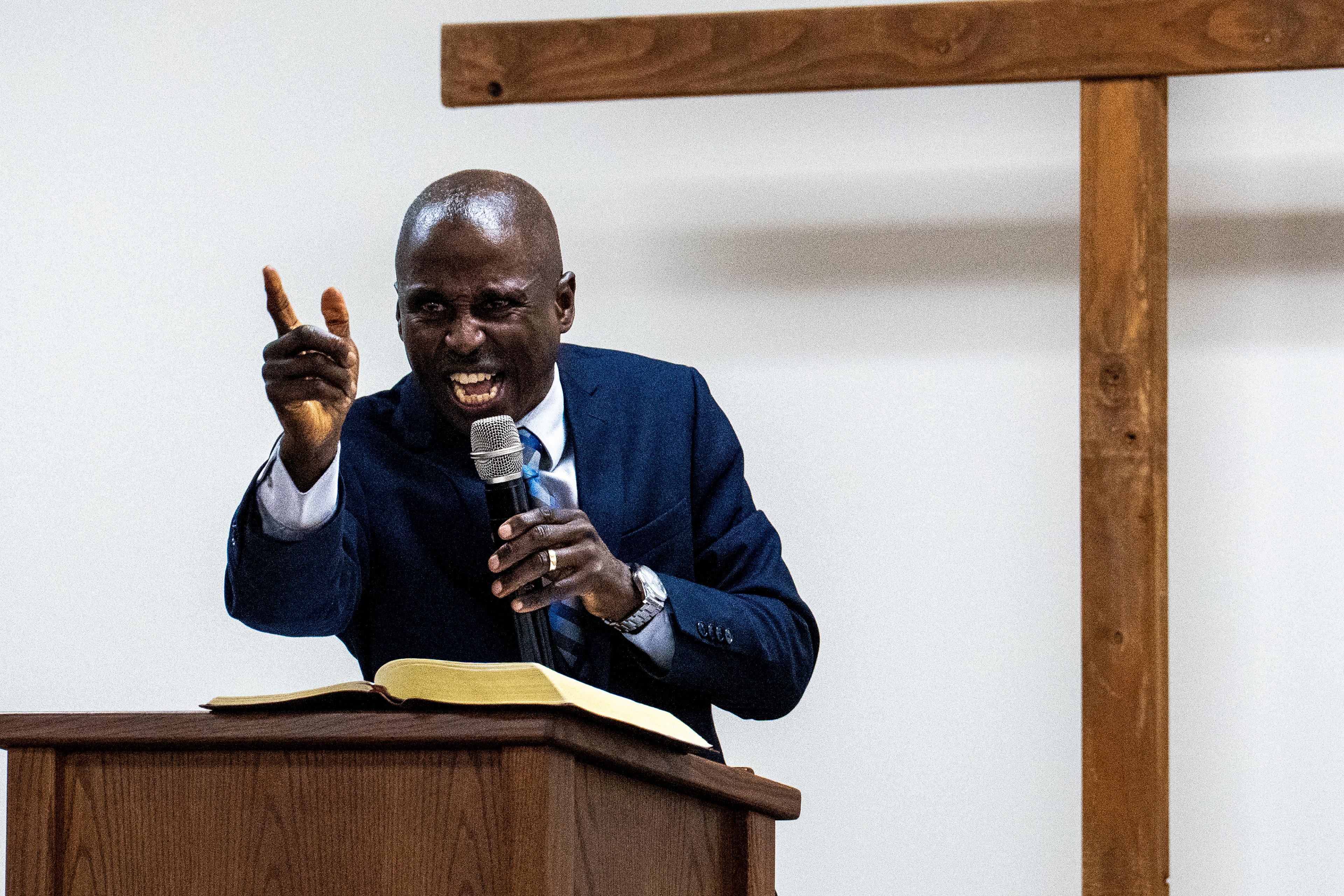
Congregants worship during a Sunday service led by Pastor Michael Venyah, also known to Michigan State students as the Wells Hall Preacher, at Soulwinners Fellowship Church in Lansing, Mich., on Sunday, April 12, 2026. Inside the strip-mall church, the service moved through music, announcements, testimony and sermon. During one testimony, a woman told the congregation her life had changed since joining the church: “I don’t go the places I used to go. I don’t smoke the drugs I used to smoke. I don’t sing the songs I used to sing.”
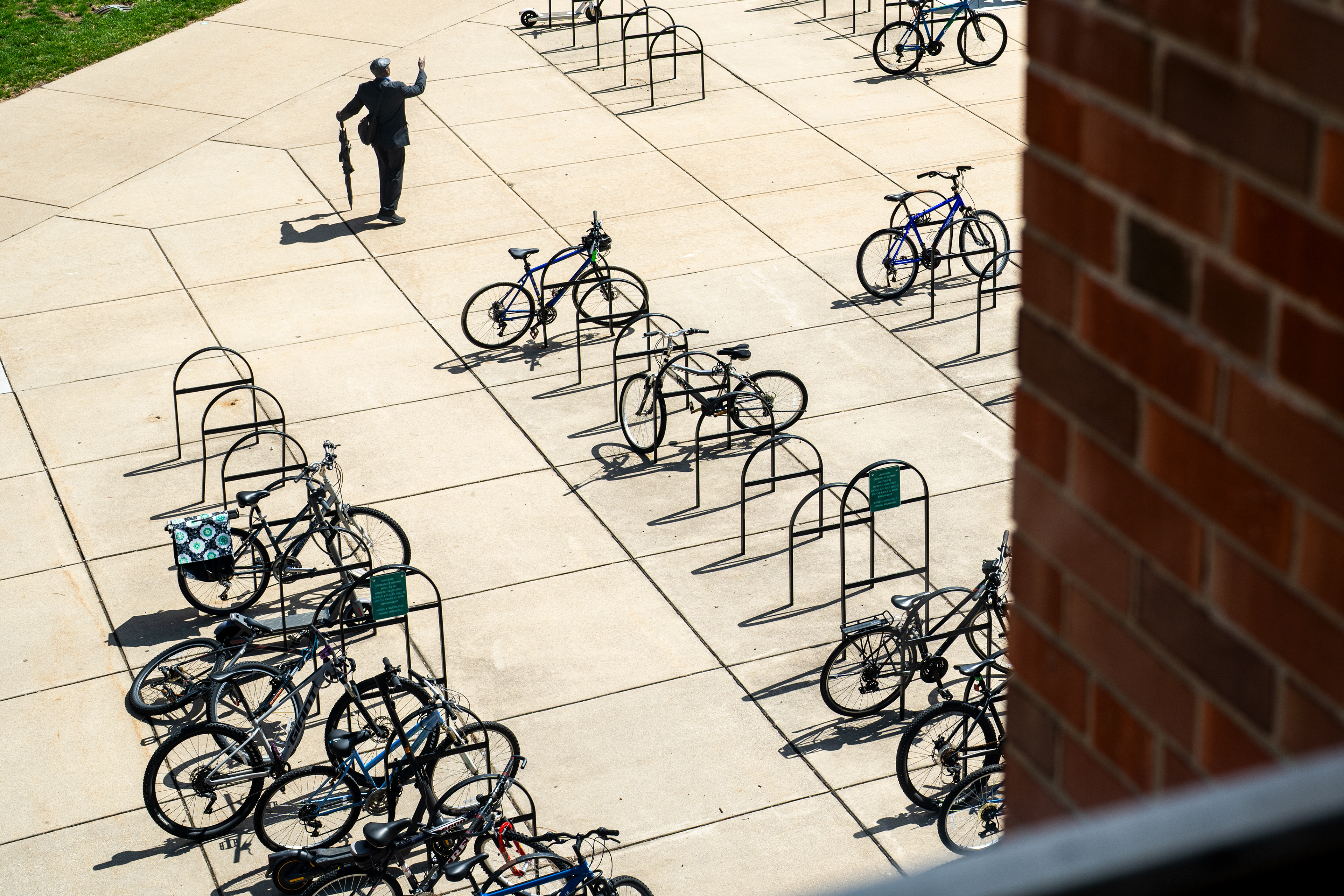
Pastor Michael Venyah delivers a sermon outside Wells Hall in People’s Park on Michigan State University’s campus in East Lansing, Mich., on Monday, April 13, 2026. Known to generations of students as the Wells Hall Preacher, Venyah used the afternoon sermon to warn passersby about sin, salvation and college life, telling students, “There will be no open-book retake exams when you stand before God!”
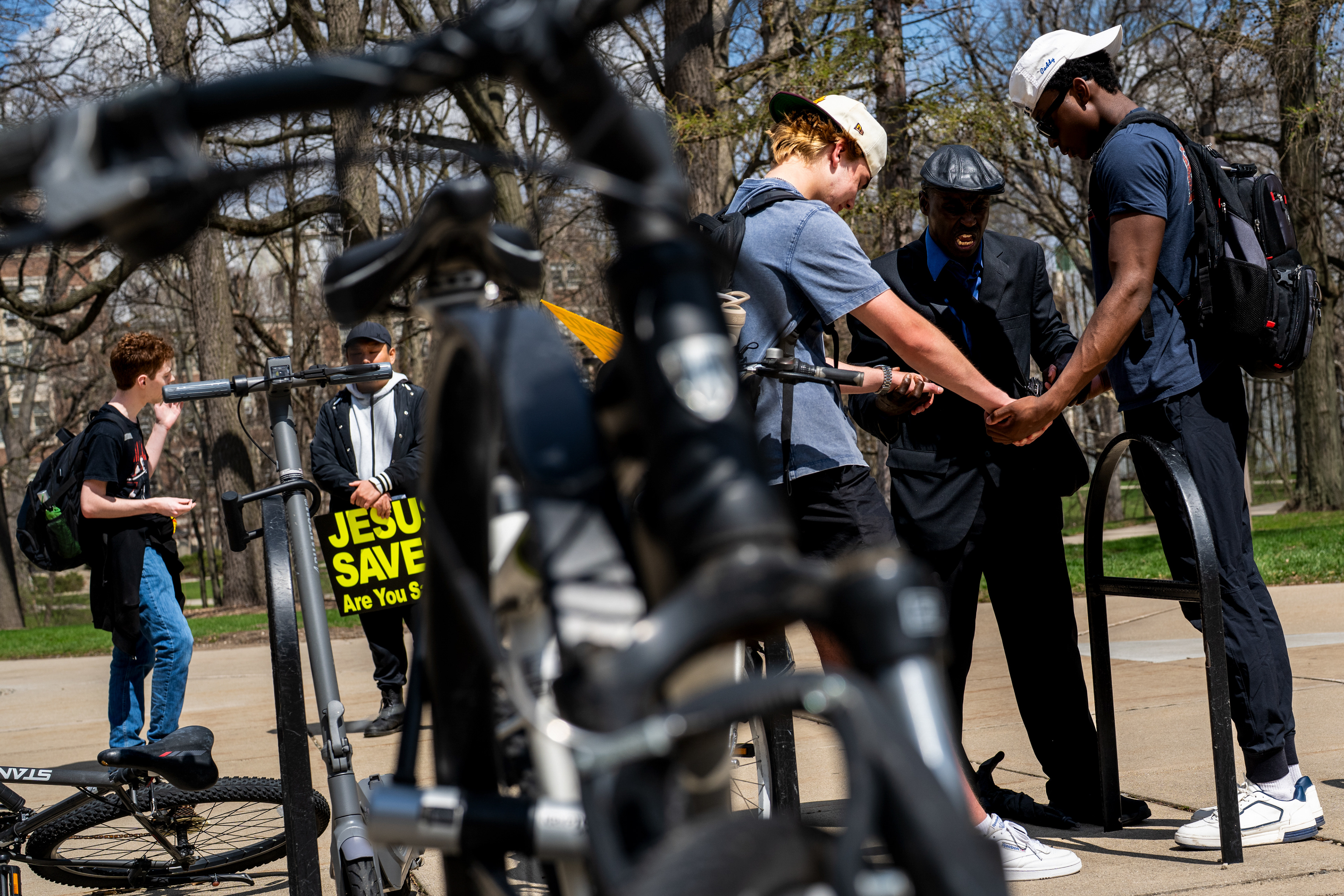
Pastor Michael Venyah, second from right, prays with Michigan State University special education freshman Henry Fluecke and University of Minnesota freshman Joe Boe outside Wells Hall in People’s Park on Michigan State University’s campus in East Lansing, Mich., on Monday, April 13, 2026. After the prayer, Fluecke said he planned to attend Venyah’s church the following Sunday: “Actually yeah. Lowkey this Sunday.”
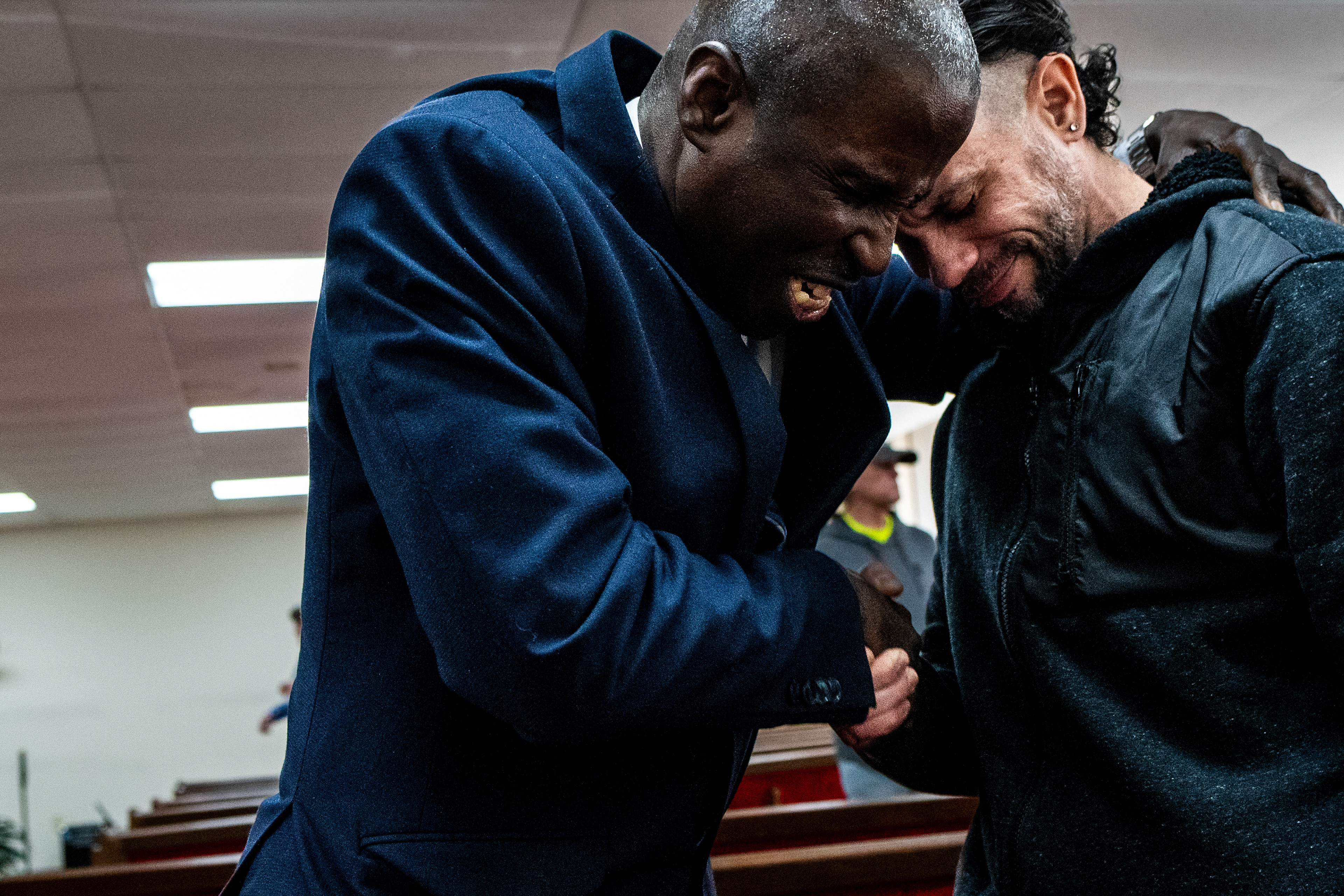
Pastor Michael Venyah prays for Rubin Roig, 42, of Puerto Rico, after a Sunday worship service at Soulwinners Fellowship Church in Lansing, Mich., on Sunday, April 12, 2026. Venyah said his work has shifted toward mentoring followers through the church, summarizing the year with the motto, “2026: Discipleship that Sticks.”
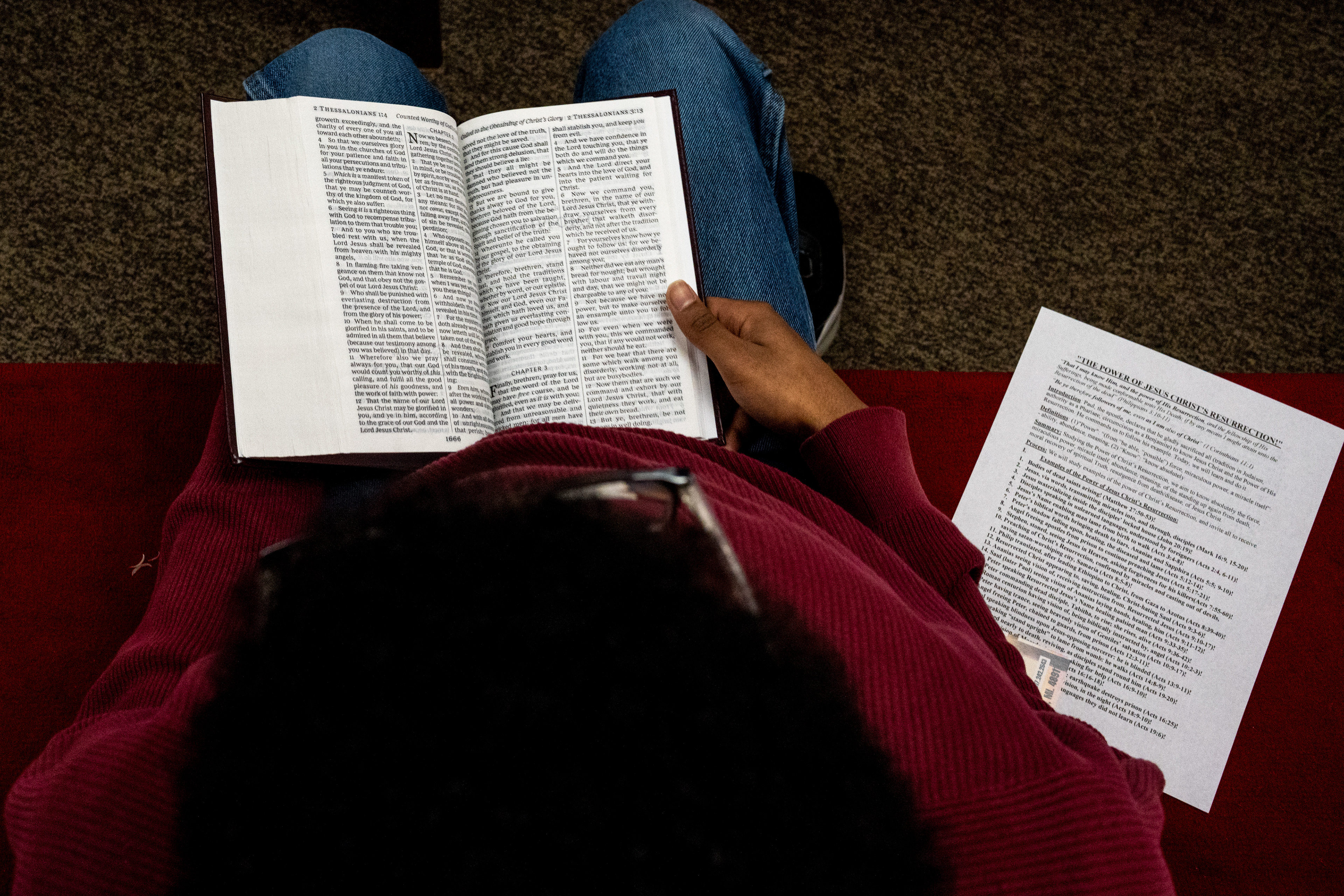
Michigan State student Jeffrey Smith reads a Bible and worship materials during a Sunday service at Soulwinners Fellowship Church in Lansing, Mich., on Sunday, April 12, 2026. Smith, who began attending after meeting Pastor Michael Venyah behind Wells Hall, said Venyah’s preaching felt “very real” and “Biblically sound.”
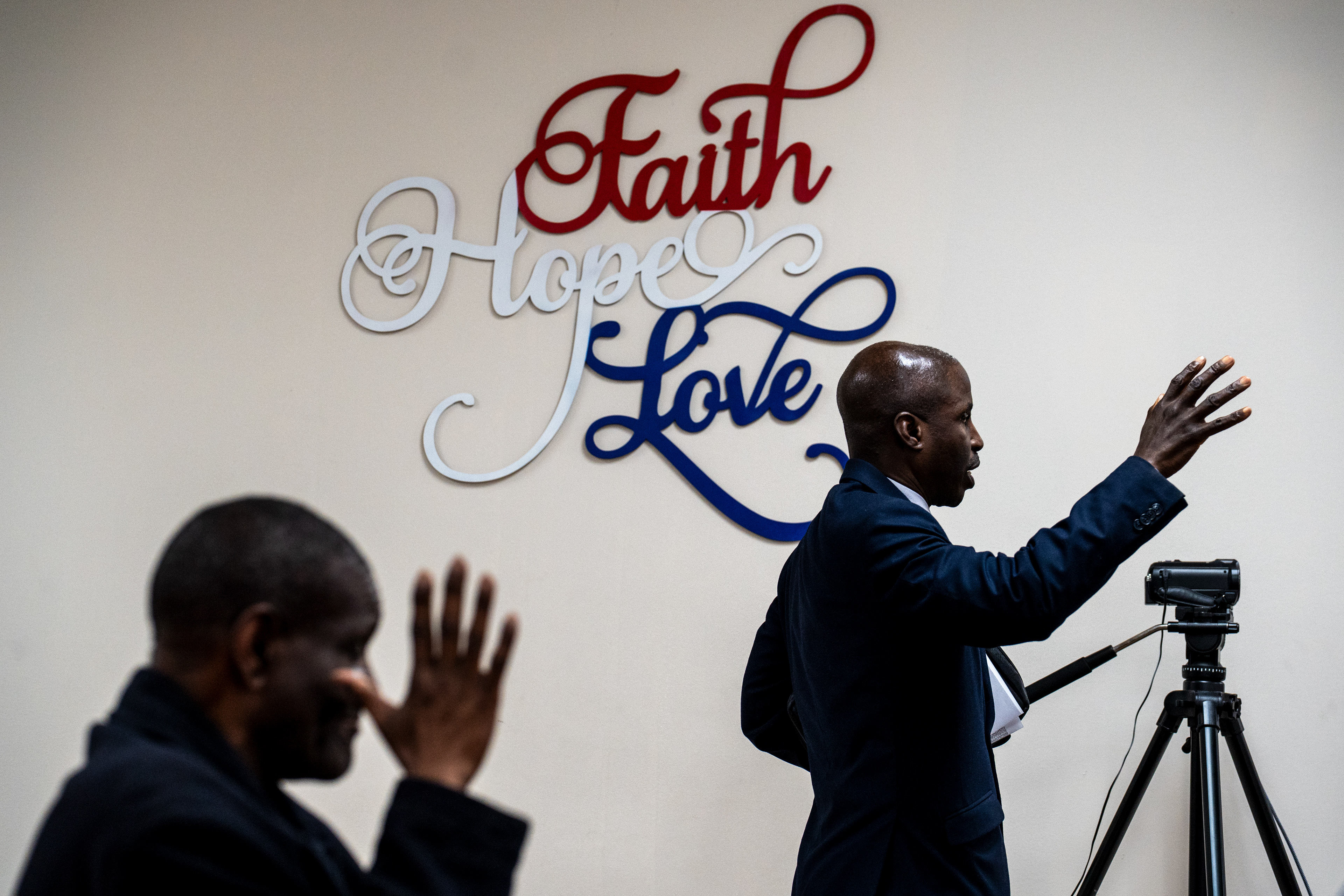
Pastor Michael Venyah, also known as the Wells Hall Preacher, worships during a Sunday service at Soulwinners Fellowship Church in Lansing, Mich., on Sunday, April 12, 2026. During the service, Venyah led congregants through worship music before delivering a sermon that moved between scripture, testimony and calls for repentance.
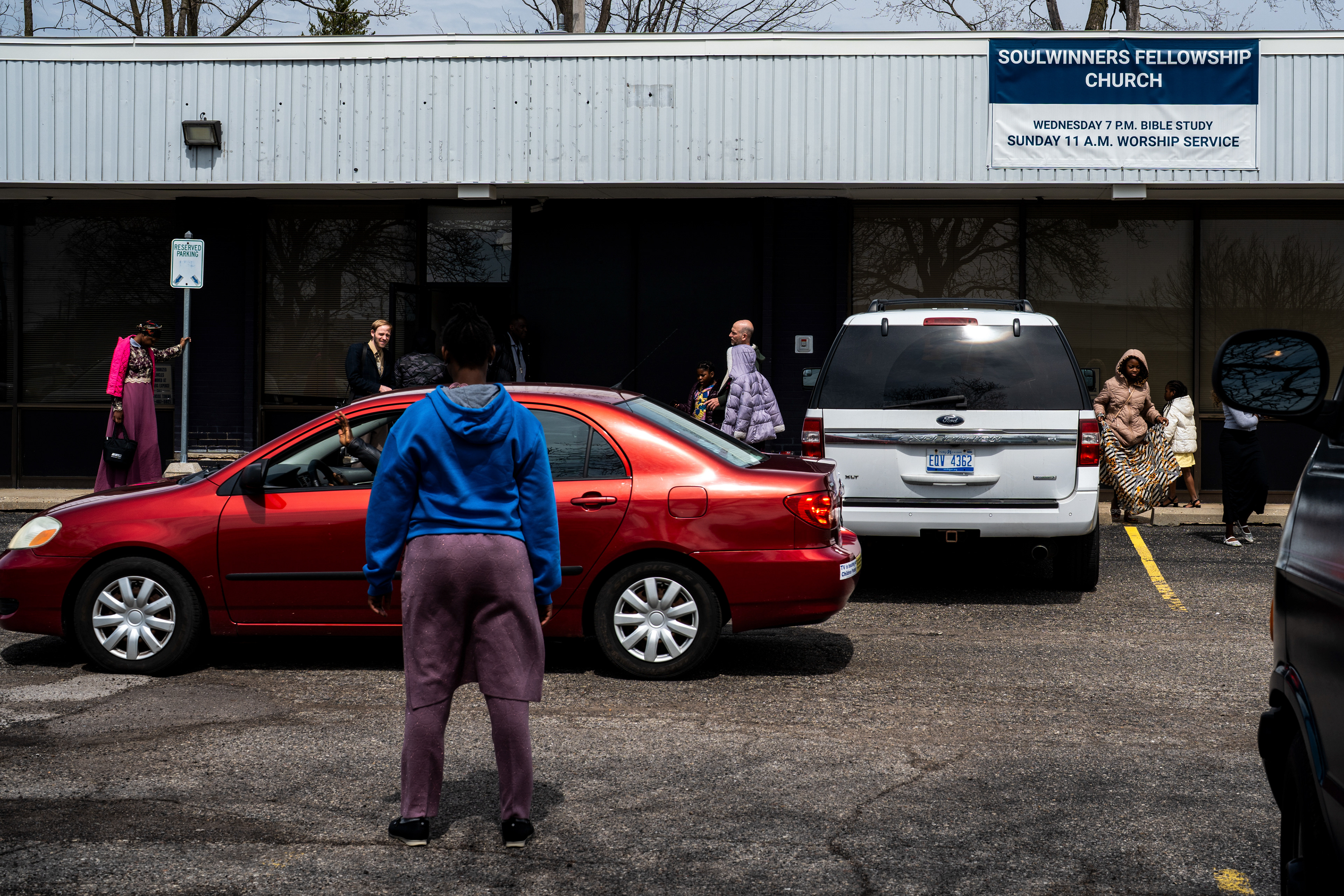
Pastor Michael Venyah departs Soulwinners Fellowship Church in a red car following a Sunday worship service in Lansing, Mich., on Sunday, April 12, 2026. As Venyah scales back his campus preaching, he said his message extends beyond religion: “I’m telling the truth about Christ, but also about the social, geopolitical environment in this country, and in this world.”
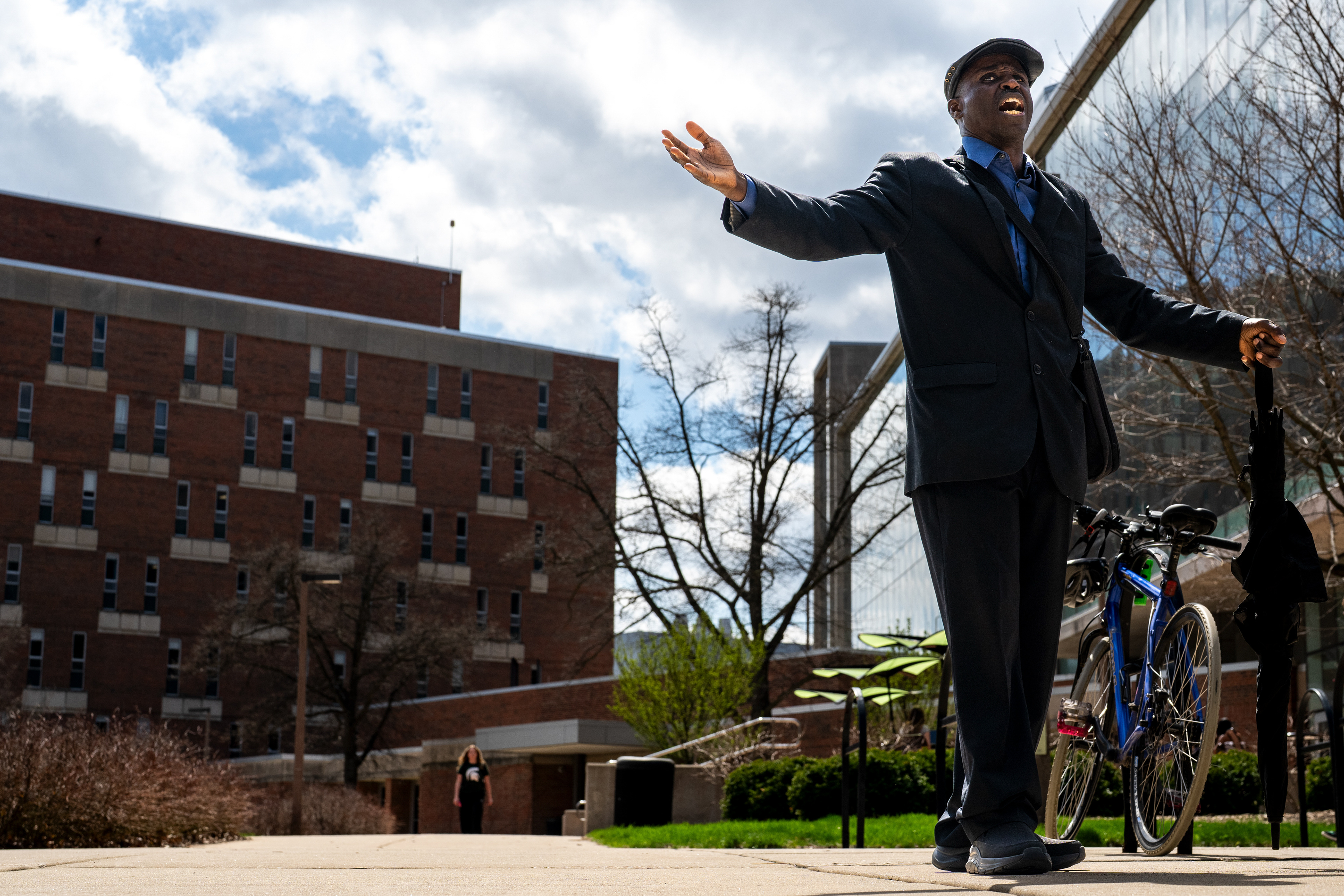
Pastor Michael Venyah delivers a sermon outside Wells Hall in People’s Park on Michigan State University’s campus in East Lansing, Mich., on Monday, April 13, 2026. Though most students passed without stopping, Venyah continued preaching from the same campus space where he has spent decades trying to reach passersby. “The majority of people who do repent do it in their college years,” he said.